
A Biofashion
company
.
Reducing fashion’s carbon footprint through science and care
The first step is Acceptance
One t-shirt - any ordinary one releases 11 kgs or 24 pounds of carbon into the atmosphere
That's a lot for something that weighs less than a kilo
The first iteration is to go from 11 to 9kgs
3 processes during manufacturing cause a lot of carbon so we want to start there
The 3 processes are:
Finishing - 0.74kg /1.63lbs
Yarn Formation - 0.73kg / 1.61lbs
Coloration 0.52kg / 1.15lbs
Altogether they can reduce a total of 2kgs/ 5lbs getting us to 9kgs or 19 pounds
How can you help? Getting a t-shirt helps enormously
It takes care of our advertising, marketing & sales
You being our model is perfect for us
It makes a statement that you are aware of the cost to the climate
& you've taken a stance against climate change, great for your street cred


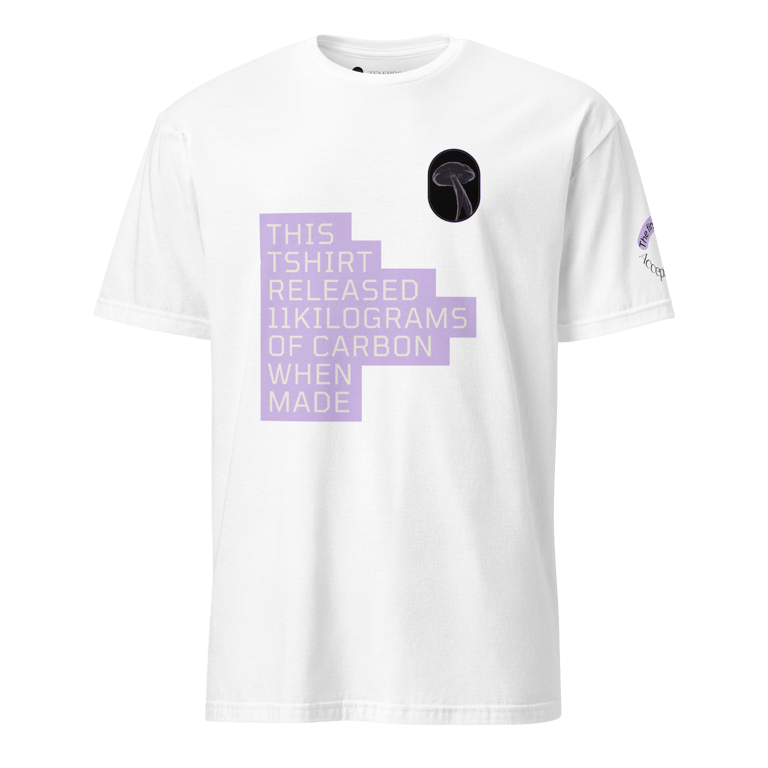
Choose one
Five step program
*We'll use only kgs from this point on (it's the international standard)
*We'll use only kgs from this point on (it's the international standard)
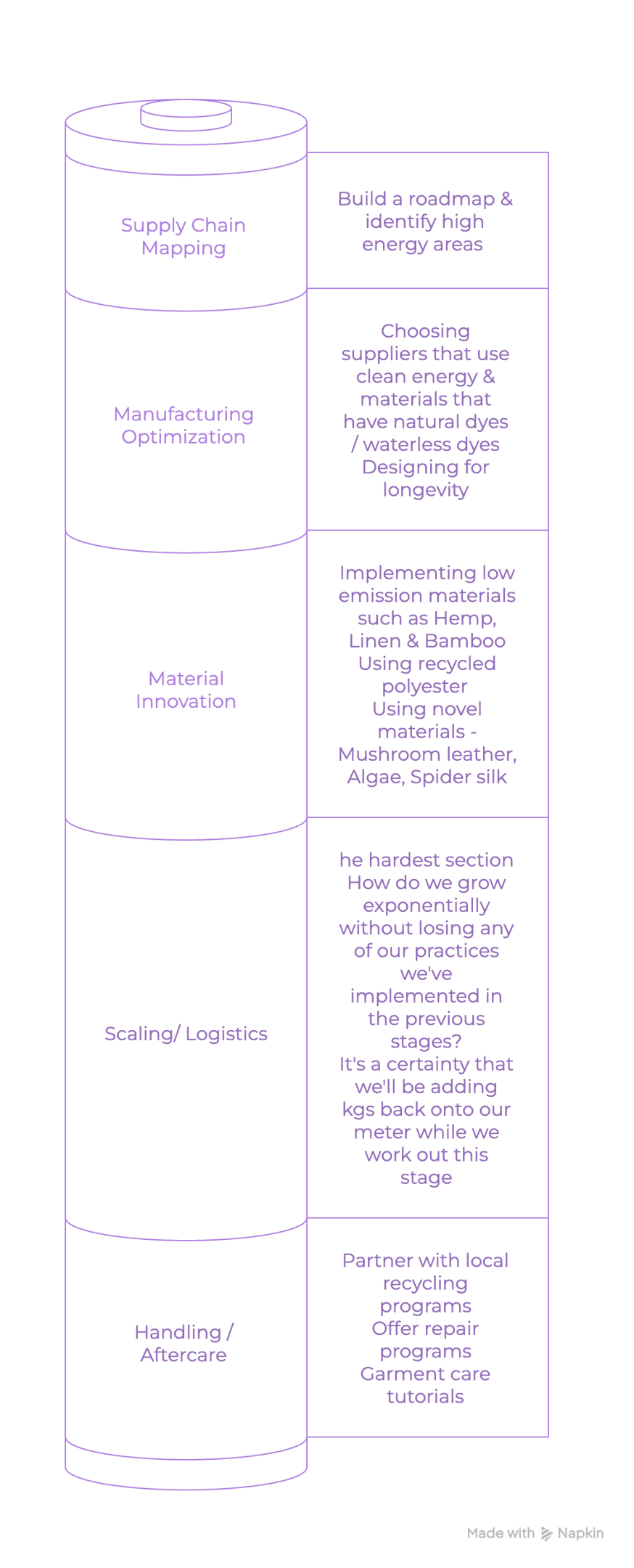
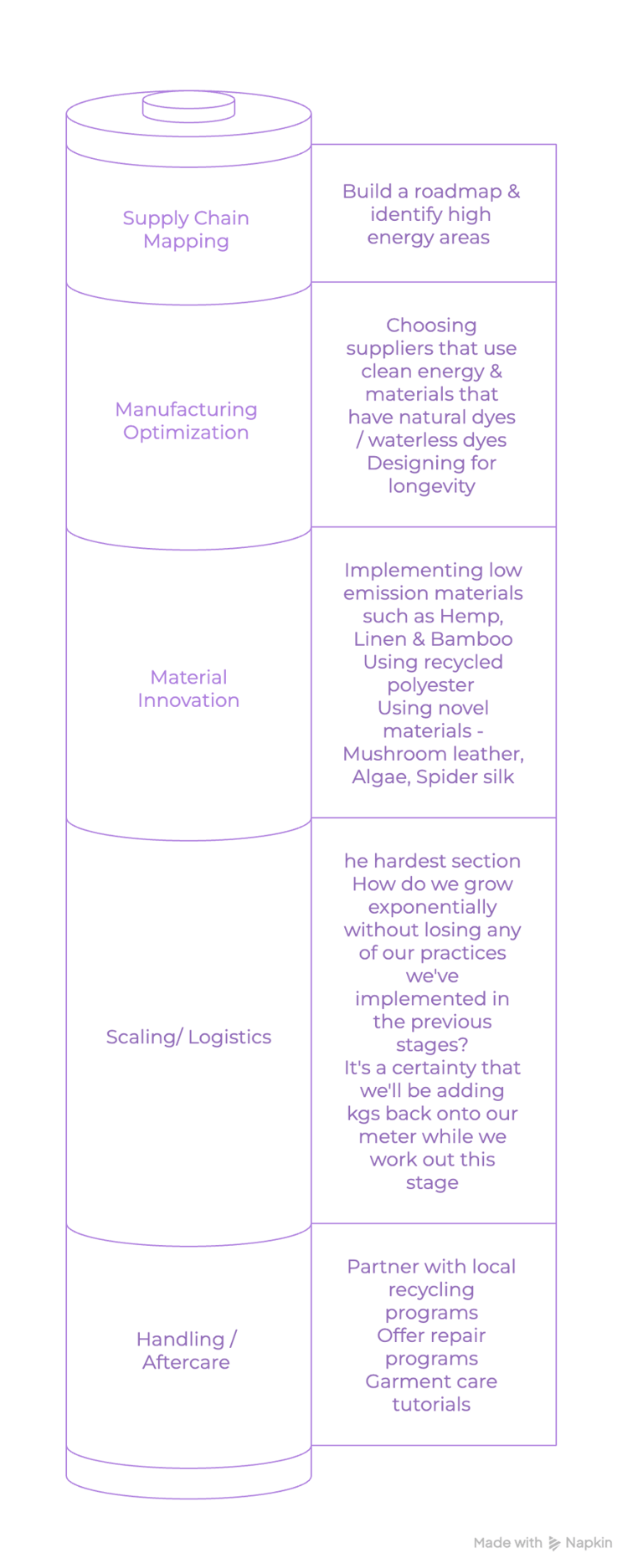
Five step program
*We'll use only kgs from this point on (it's the international standard)
*We'll use only kgs from this point on (it's the international standard)
Reducing Garment Emissions
Vision
Our vision is not to be carbon neutral but to become carbon negative
Getting to neutral is a big task by itself; but, there is too much carbon in the atmosphere
A good starting point is to identify this as our goal
Everyone partakes in fashion but the industry is quite inefficient
Cotton - even though it's an organic material, it’s not quite sustainable given its farming practices. It damages the environment by removing polyculture forests for monoculture plants
Our big idea is to introduce biofabrics, garments made from mushroom leather & algae which are less carbon intensive. There’s a lot of innovation in this front but it’s not scaling up very well.
Our research focus at this moment is directed at scaling with biofabrics
FAQs
What are biofabrics?
Biofabrics are innovative materials made from biological sources, including natural fibers and biosynthetic fibers, designed to be more sustainable than traditional textiles.
How do they reduce carbon?
By designing clothes that need less water and energy, we cut emissions.
Do you use AI?
No, it would be hypocritical to try and cut carbon while using a technology that is so energy intensive
Absolutely, our materials are designed to be recyclable and eco-friendly.
Can I recycle these clothes?
Where can I buy them?
As of now they're online but
they'll be at select retail stores soon
Contact Us
We'd love to hear from you. If you have further questions or any complaints; please reach out
contact@tenebrosobyMarina.com
© 2026 All Rights Reserved


Reach out to us at:
Sitemap